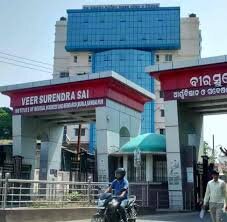
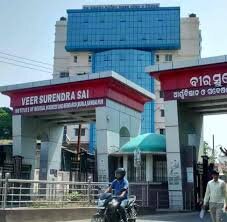
Veer Surendra Sai Institute Of Medical Science And Reserch (VIMSAR ) , Sambalpur, Odisha
Veer Surendra Sai Institute of Medical Sciences and Research formerly called V.S.S.Medical College and Hospital situated by the side of Hirakud Dam began her march to fame with a spirit of nationalism and an urge to serve, educate and innovate. The present eminence is the culmination of efforts of countless men and women who gave their best under good circumstances and also during difficult situations.
Courses Coming Soon
Detailed program curriculum, fee structures, and course specializations for this university are currently being updated by our team.
About Veer Surendra Sai Institute Of Medical Science And Reserch (VIMSAR ) , Sambalpur, Odisha
This rural medical college has many dreams yet to be realized. Catering the health needs of Western Odisha, part of Chhatisgarh and Jharkhand fully in view of rapid urbanization and industrialization in the vicinity it needs rapid expansion and state of the art facilities soon to keep its old tradition and meeting these challenges. We strive hard to offer a balanced blend of preventive, promotive, curative and rehabilitative services to the society.
Unremitting zeal, devotion and professional competence with empathy of the medical and paramedical personnel have ensured that on completion of study, our young doctors realize that "We Touch, God Heals" and they have to serve the mankind with love and compassion.
Vision Statement
The vision of VSS is to be an outstanding academic centre of excellence while affirming and committed to rigorous scholarship, academic freedom, sound moral values , empathy towards patients and social responsibility.
Mission
VSS strives to produce outstanding accredited graduates who are innovative, analytical, articulate, adaptable, life-long learners contributing to the health , educational, cultural, economic and natural environment of the society we serve.
OBJECTIVES
To develop a pattern of teaching in undergraduate and postgraduate medical education in all its branches so as to prepare Human Resources for Health for Odisha and India at large.
To render health services to both rural and urban people of western Odisha and part of Chhatisgarh and M.P.
To integrate with state health services and NGOs in implementing national health programs in terms of training,monitoring,supervision and expertise in related fields
The objectives of the Faculty are that at the end of the period of undergraduate training, doctors should
1) Adopt an empathic and holistic approach to patients and their problems and be motivated to serve the people of India
2) Have developed positive attitudes towards patients, the community and members of the health team, and be aware of rights of patients.
3) Have a perception of the ethical issues relating to individual doctor-patient relationships with other professionals and with society as a whole.
4) Possess the skills to communicate effectively in both national languages and in Odia with patients, relatives, carers and the healthcare team
5) Have the desire and capability to maintain professional standards.
6) Demonstrate knowledge of structure and function of the human body and their inter-relationships in health and disease.
7) Demonstrate knowledge & skills to diagnose, treat, follow up and prevent diseases common in Sri Lanka and manage medical emergencies with the available resources.
8) Be aware of other diseases which illustrate important principles in medical science and demonstrate a basic knowledge of less common diseases.
9) Be able to recognize serious diseases in the early stages.
10) Understand and engage in reflective practice, audit and self appraisal, be aware of limitations of their professional skills, available facilities and be able to recognize conditions where referral is necessary .
11) Be able to carry out basic medico-legal procedures, and comply with legal and administrative responsibilities applying the principles of confidentiality , consent and integrity .
12) Have a knowledge of the managerial skills required to administer health institutions and health teams and be able to take a leadership role when necessary .
13) Posses skills to efficiently and effectively manage physical resources, human resources, financial resources and information resources in a healthcare setting, and be able to take a leadership role when necessary .
14) Have the knowledge to deliver primary health care.
15) Develop knowledge, attitudes and skills in prevention of diseases and promotion of health taking into
consideration social, cultural and economic characteristics of the individual and the society .
16) Be aware of the principles of behavioural sciences as applied to health and practice of medicine.
17) Be aware of alternative systems of medicine practiced in the country .
18) Be capable of continuing self-learning, analytical and critical thinking reasoning and decision making skills.
19) Be equipped to undergo further post-graduate training.
20) Recognize the importance of issues such as stress reduction, self care and avoiding unhealthy and un ethical practices.
21) Demonstrate the skills of being a life long learner.
All Offered Courses
Courses Coming Soon
Detailed program curriculum, fee structures, and course specializations for this university are currently being updated by our admissions team.
Scholarship Details
Key Achievements
Placement Records & Support
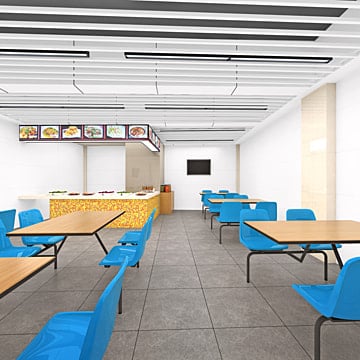
Campus Facilities



.jpg)


.jpg)

.jpg)